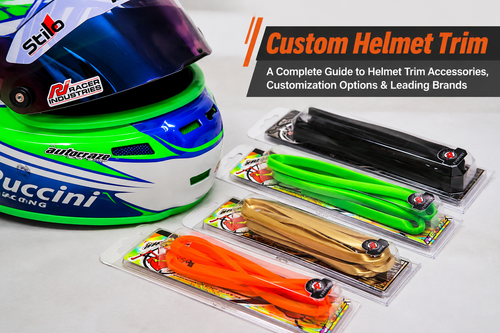




Custom Helmet Trim: A Complete Guide to Helmet Trim Accessories, Customization Options & Leading Brands
- on November 13, 2026
- Categories: News
A racing helmet is an important part of a driver's equipment, but its appearance can also reflect personal style. While helmet designs often come with distinctive colours, graphics, and finishes, some drivers prefer to add their own finishing touches. That's where custom helmet trim comes into the picture.
Custom trim offers a way to personalize certain parts of a helmet without changing its overall design. Depending on the helmet and the available accessories, this may include decorative trim pieces, replacement edging, or other finishing details designed for a particular model.
However, choosing the right trim involves more than finding something that looks good. Compatibility, material, fit, installation, and the helmet manufacturer's guidelines all matter. Whether you're exploring custom trim for helmets for the first time or looking for replacement helmet trim accessories, understanding these details can help you make a more suitable choice.
This guide covers the different types of custom helmet trim, what to look for in a trim kit, and some considerations when exploring options for Arai, Bell, and Stilo helmets.
What Is Custom Helmet Trim?
Custom helmet trim refers to decorative or finishing components used to personalize or replace certain trim details on a helmet. These components can add a different visual touch, complement an existing helmet design, or help maintain the appearance of compatible helmet parts.
Unlike a complete helmet graphics change, custom trim generally focuses on smaller details around specific areas of the helmet. The exact placement and purpose depend on the product. Some options are designed for appearance, while others may serve as replacement finishing components.
For racing enthusiasts, these small details can make a difference in how their equipment looks. A carefully selected trim colour or finish can complement a helmet's existing graphics, racing suit, or overall setup.
It's important to understand that custom helmet trim is not a substitute for helmet repairs or structural modifications. Any component that affects the helmet's protective shell, liner, retention system, or safety performance should only be handled according to the manufacturer's instructions.
Different Types of Helmet Trim Accessories
Helmet trim accessories are available in different styles and designs, depending on the helmet model and the manufacturer's product range. Before choosing an accessory, it helps to understand what type of component you're actually looking for.
Here are some common categories to consider.
1. Decorative Helmet Trim
Decorative trim is primarily intended to change or complement the appearance of a helmet. It may be available in different colours, finishes, or designs to coordinate with existing helmet graphics.
For example, a driver with a helmet featuring a particular colour scheme may want trim details that create a more consistent overall appearance.
When choosing decorative trim, consider the existing helmet finish, colour combination, and the specific area where the accessory will be installed.
2. Replacement Trim Components
Some helmet trim products are designed to replace existing finishing components rather than simply add decoration. These may be useful when an original compatible trim piece becomes worn, damaged, or discoloured.
However, not every decorative accessory is suitable as a replacement component. Check whether the product is specifically intended for replacement use and whether it matches the exact helmet model.
3. Model-Specific Trim Accessories
Certain helmet accessories are manufactured for particular helmet models or product ranges. Their dimensions, attachment points, and overall design may differ from those of other helmets.
This is particularly important when exploring Arai Helmet Trim, Bell Helmet Trim, or Stilo Helmet Trim. A product that fits one helmet model should not automatically be assumed to fit another helmet from the same manufacturer.
Checking the product specifications before ordering can help avoid unnecessary compatibility problems.
How Custom Trim for Helmets Can Change Their Appearance
The appeal of custom trim is often found in the smaller details. A helmet doesn't necessarily need a completely different graphic design to achieve a more personalized appearance.
The right finishing details can complement the helmet's existing colours and create a more coordinated look.
Here are a few things worth considering when selecting custom trim for helmets.
Colour coordination: Choose a trim colour that works with the helmet's existing graphics, base colour, or other racing equipment. A complementary colour can create a balanced appearance without making the design look too busy.
Overall design: Consider whether the trim will suit the helmet's existing shape and graphic layout. A simple design may benefit from subtle finishing details, while a helmet with more complex graphics may look better with a restrained trim choice.
Finish and material: Different products may use different materials and surface finishes. Review the product description to understand what you're purchasing rather than assuming that all trim accessories have the same construction.
Intended application: Determine whether the accessory is decorative, a replacement component, or a model-specific finishing part. These products should not be treated as interchangeable.
A useful approach is to look at the helmet as a complete design rather than choosing an individual accessory without considering how it will look alongside the existing details.
Custom Trim Kits: What Should You Know Before Buying?
Custom trim kits can be a convenient option for buyers who want multiple compatible trim components together. Instead of searching for individual pieces, a kit may provide the specific parts needed for a particular customization or replacement application.
However, the contents of custom trim kits can vary. Some may contain a limited selection of decorative components, while others may include several pieces intended for a specific helmet model.
Before purchasing a kit, consider the following points.
Check What's Included
Never assume that every trim kit contains the same components. Read the product description carefully and check the listed contents, quantities, colours, and any installation-related information.
If you need a particular piece, make sure it is actually included in the kit.
Confirm Helmet Compatibility
Compatibility should be one of your first considerations. Check the manufacturer's name, exact helmet model, and model year where applicable.
Even helmets from the same brand may have different dimensions or attachment arrangements. A trim kit designed for one model may not fit another.
Review the Material and Finish
Look for clear product information about the materials and finish. This can help you understand the appearance and intended use of the components.
If the material or application is not clearly explained, contact the seller or manufacturer before ordering.
Understand the Installation Requirements
Some accessories may be straightforward to install, while others may require specific tools or professional assistance.
Always follow the relevant manufacturer's instructions. Avoid cutting, drilling, reshaping, or modifying protective helmet components to make an accessory fit.
Consider Whether You Need a Kit or an Individual Piece
A complete kit isn't always necessary. If you're replacing one specific component, an individual replacement part may be more appropriate, provided it is available and confirmed as compatible.
Thinking about your actual requirements before purchasing can help prevent unnecessary spending.
Exploring Custom Helmet Trim Options by Brand
Helmet brands may offer different designs, dimensions, and accessory arrangements. For this reason, brand-specific compatibility is an important consideration when looking for custom helmet trim.
Arai, Bell, and Stilo are three established names in motorsport helmets. However, their accessories should be evaluated according to the individual helmet model rather than the brand name alone.
Arai Helmet Trim
Arai helmets are known for their distinctive shell designs and model-specific construction. When looking for Arai Helmet Trim, start by identifying the exact helmet model.
Different Arai models may use different finishing components, so a trim accessory intended for one model should not automatically be considered suitable for another.
Before purchasing, check:
- The exact Arai helmet model.
- Whether the trim is designed for that model.
- The component's intended purpose.
- Available colour and finish options.
- Any manufacturer-specific installation instructions.
If you're looking to personalize an Arai helmet, choosing a compatible accessory is more important than selecting a trim piece based on appearance alone.
Bell Helmet Trim
Bell helmets are used across different motorsport disciplines, with product ranges designed for different applications. This means that accessory compatibility can vary considerably between helmet models.
When exploring Bell Helmet Trim, check the product specifications rather than relying solely on the Bell brand name.
Pay attention to the helmet's model designation, production version, and the type of trim component you need. If you're replacing an existing piece, comparing the replacement product with the original component can also be helpful.
For decorative customization, consider how the trim colour and finish work with the helmet's existing graphics.
Stilo Helmet Trim
Stilo helmets are another option for drivers looking at model-specific motorsport accessories. As with other manufacturers, the correct trim choice depends on the particular helmet design and accessory requirements.
When shopping for Stilo Helmet Trim, confirm the exact model and check whether the accessory is listed as compatible.
It's also worth distinguishing between decorative finishing pieces and functional or replacement components. If a product is intended to serve a specific purpose, make sure its description and manufacturer guidance support that application.
An important point about all three brands: Arai, Bell, and Stilo accessories should not be assumed to be interchangeable. Always confirm compatibility with the helmet manufacturer or an authorized supplier before making a purchase.
How to Choose the Right Custom Helmet Trim
With different styles, materials, and product options available, choosing the right custom helmet trim can take a little research. The best option is not necessarily the most colourful or expensive one. It is the component that suits your helmet, meets your requirements, and is appropriate for its intended use.
Here are some practical steps to follow.
1. Identify your helmet model: Start with the manufacturer's name and exact model designation. If possible, check the model information on your helmet documentation or the manufacturer's product information.
2. Decide what you want to change: Are you looking for a different appearance, replacing an existing trim component, or purchasing a complete trim kit? Knowing the purpose will help narrow down the available options.
3. Compare compatible products: Look at the product descriptions, specifications, and compatibility details. Don't assume that two accessories with similar appearances will have the same fit.
4. Check the available finishes: Compare the colours and finishes against your helmet's current design. Consider whether you want the trim to blend in or provide a noticeable contrast.
5. Review installation guidance: Before purchasing, find out how the component is installed and whether any special instructions apply. If the installation involves a safety-related helmet component, consult the manufacturer or a qualified professional.
6. Ask questions when information is unclear: If the product listing doesn't clearly identify compatible models, contact the seller before ordering. Providing your exact helmet model can make it easier to confirm whether the accessory is suitable.
Common Mistakes to Avoid When Buying Helmet Trim Accessories
Even a relatively small accessory deserves careful consideration, particularly when it is intended for use on protective equipment.
Some common mistakes include:
- Buying based on appearance alone: A trim piece may look suitable but still be incompatible with your helmet. Always verify the model and product specifications.
- Assuming all brands use the same fittings: Arai, Bell, and Stilo helmets have different product designs. Never assume that a trim accessory from one manufacturer will fit another.
- Confusing decorative trim with replacement parts: A decorative component is not automatically suitable for replacing an original helmet part.
- Ignoring installation instructions: Incorrect installation or unauthorized modification can affect helmet components. Follow the manufacturer's guidance and seek professional assistance when needed.
- Overlooking the product description: Check the contents, material, dimensions, intended use, and compatibility details before placing an order.
Avoiding these mistakes can make the buying process more straightforward and help you select an accessory that meets your actual requirements.
Where to Find Custom Trim and Helmet Trim Accessories
Once you know what type of trim you're looking for, the next step is finding a supplier with clear product information and relevant product specifications.
When comparing options, pay attention to the intended application, product details, compatibility information, and what is actually included in the purchase. These details are particularly important when looking for helmet trim accessories, as not every product will be suitable for every helmet model.
For readers researching custom helmet trim options, the AutoCraze custom trim collection provides a relevant place to explore the available product. Before making a purchase, review the listing carefully to understand what the product is intended for and whether it meets your requirements.
What to Check Before Buying Custom Trim from AutoCraze
Before purchasing custom trim, take a moment to review the product information rather than relying on its appearance or general description alone.
When exploring the Custom Trim collection at AutoCraze consider the following:
- Product details: Read the available description to understand exactly what the product includes.
- Intended application: Check whether the trim is suitable for your intended use.
- Helmet compatibility: Confirm compatibility with your specific helmet model before ordering.
- Installation requirements: Review any available installation guidance and follow the helmet manufacturer's recommendations.
If any important information is missing, contacting the supplier before purchasing is a sensible step. This is especially important when the accessory is intended for use with protective equipment.
Final Thoughts
At Auto Craze, custom helmet trim offers an opportunity to personalize the finishing details of a racing helmet. However, choosing the right product involves more than simply finding an option that looks appealing.
Understanding the difference between decorative accessories and replacement components, checking helmet compatibility, and reviewing product specifications can help you make a more informed decision.
Whether you're researching Arai Helmet Trim, Bell Helmet Trim, Stilo Helmet Trim, or general custom trim options, always consider your helmet's exact model and the intended application of the accessory.
If you're exploring available products, the Custom Trim collection on the Auto Craze platform is a useful starting point. Review the product information carefully and confirm any compatibility questions before placing your order.
Frequently Asked Questions About Custom Helmet Trim
1. What is custom helmet trim?
Custom helmet trim refers to decorative or finishing components used to personalize or replace certain helmet trim details. The available options depend on the helmet model and the intended application.
2. Are helmet trim accessories universal?
No. Helmet trim accessories are not necessarily universal. Different manufacturers and helmet models may use different dimensions, fittings, and attachment arrangements. Always check compatibility before purchasing.
3. Can I use custom trim on an Arai, Bell, or Stilo helmet?
Potentially, depending on the specific accessory and helmet model. Arai, Bell, and Stilo each have different helmet designs, so you should confirm that the selected trim is intended for your exact model.
4. What should I look for when buying custom trim kits?
Check the kit contents, material, finish, intended application, compatibility information, and installation requirements. Make sure the kit contains the components you actually need.
5. Can custom trim change the appearance of a racing helmet?
Yes. Decorative trim can complement a helmet's existing colours and graphics, helping create a more personalized appearance. The available customization options depend on the accessory and helmet design.
6. Is custom helmet trim the same as helmet graphics?
No. Helmet graphics generally refer to printed or applied visual designs across the helmet's surface. Custom trim usually refers to smaller finishing or decorative components. They serve different purposes.
7. How do I know whether a trim accessory will fit my helmet?
Check the manufacturer's name, exact helmet model, model year where relevant, and the accessory's compatibility specifications. If the information is unclear, ask the manufacturer or supplier before ordering.
8. Can I install custom helmet trim myself?
That depends on the product. Some decorative accessories may have straightforward installation instructions, while other components may require professional assistance. Always follow the helmet manufacturer's guidance and avoid modifying structural or protective components.
9. Does custom trim affect helmet safety?
Decorative trim should never be assumed to have no effect on safety. Incorrect installation, unauthorized modifications, or interference with protective components may compromise helmet performance. Use only approved or confirmed-compatible accessories and follow the manufacturer's instructions.
10. Should I buy an individual trim piece or a complete trim kit?
It depends on what you need. An individual component may be sufficient when replacing one specific piece, while a kit may be more suitable when several compatible components are required. Compare the contents and compatibility before deciding.
About Author